
Monsoon and Wash Flooding in Fountain Hills: How Desert Water Gets Into Your Home
How monsoon storms and desert washes push water into Fountain Hills homes, which features are most at risk, and what to do in the first hours.
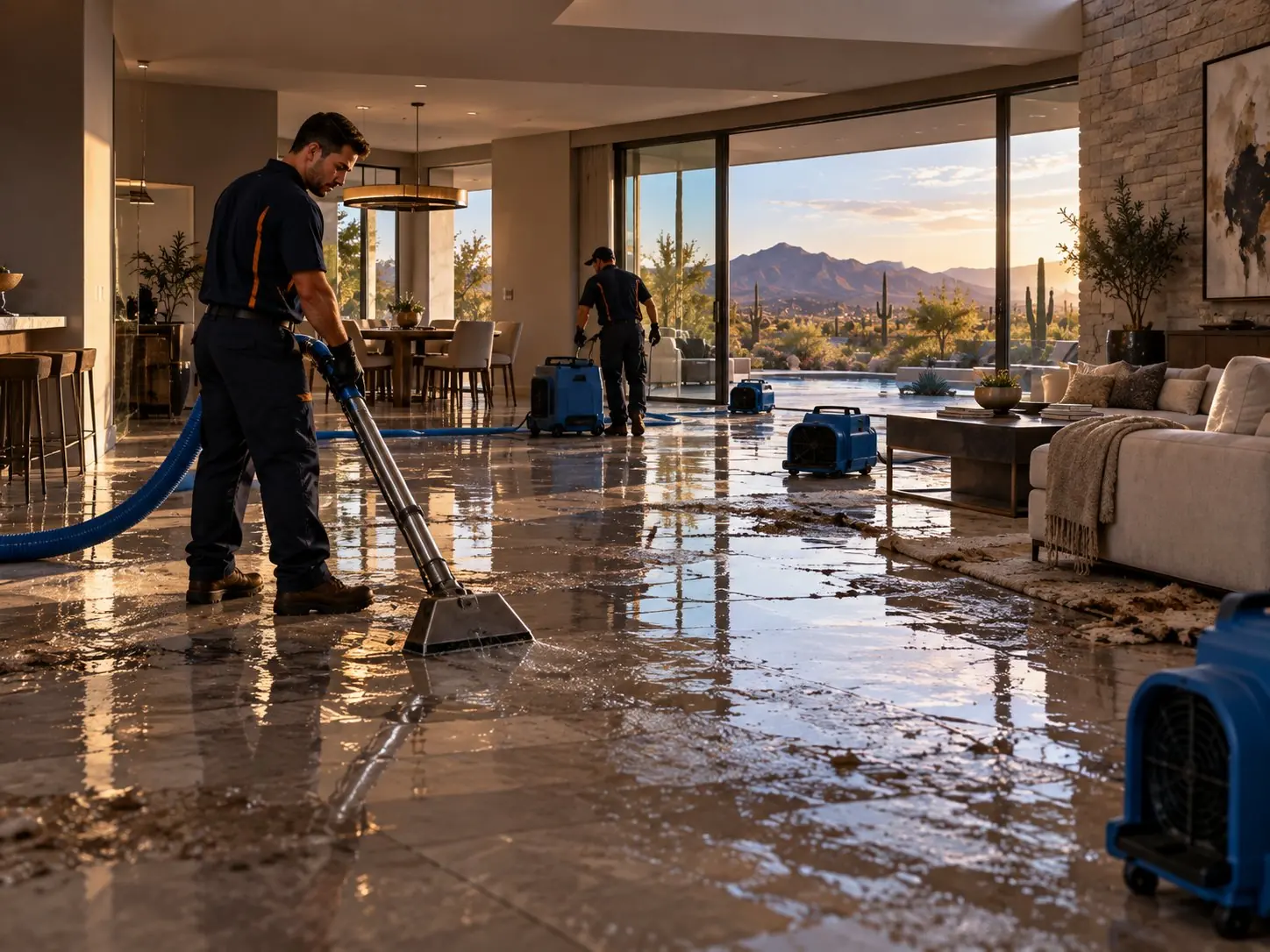
A desert storm does not behave like steady rain in a wetter climate. In Fountain Hills, a monsoon storm can drop a large amount of water in a short time on ground that is dry, hard, and sloped. Instead of soaking in slowly, much of that water runs across the surface, gathers speed, and follows the natural low paths through the desert. Those paths are the washes, and many Fountain Hills homes sit close to one, above one, or in the route water takes to reach one. When a wash rises or a yard drains the wrong way, water can reach a home faster than most owners expect.
This guide explains how monsoon and wash flooding actually enter Fountain Hills homes, which parts of a home are most exposed, what to do safely in the first hours, and what proper drying looks like in a desert home once the storm has passed.
How washes and monsoon runoff push water into homes
Fountain Hills is built on desert terrain that rises and falls, and the washes are part of how that terrain drains. In dry weather a wash can look harmless, just a shallow channel of sand, rock, and brush. During a monsoon storm it becomes a working waterway. Runoff from streets, roofs, and higher lots feeds into it, and the water level can climb quickly while the storm is still overhead.
Homes get wet in a few repeatable ways. Water flowing along a wash can overtop a low bank or a block wall opening and spread across a yard toward the house. Runoff that cannot reach the wash fast enough can pool against the home, especially where the lot is lower than the street or lower than a neighbouring lot. Water pooled against a wall does not need a visible hole to get in. It can seep at the base of stucco, enter through weep screeds and door thresholds, and wick into the wall and floor materials from the ground up. Garages are a common entry point because the slab often sits at or near grade, and a driveway that slopes toward the garage sends storm water straight to the door.
The second wave of damage is slower. Desert soil and the gravel and sand under slabs and patios can hold storm water and release it against foundations for days after the surface looks dry. That is why a home can seem fine the morning after a storm and show damp baseboards or a musty smell later in the week.
The home features most at risk
Not every Fountain Hills home faces the same risk. The features below are the ones that decide most monsoon water problems.
- Low lots and low spots in the yard. If your lot sits lower than the street or the lots around it, runoff collects on your property instead of leaving it. Water that ponds near the home is water with time to seep in.
- Block walls and wall openings. Perimeter block walls keep water out only while it stays shallow. Gates, drainage openings, and any spot where the ground outside the wall is higher than the ground inside can turn the wall into a funnel. Walls also hold water in, so a yard that fills up may drain slowly even after the rain stops.
- Drainage paths that cross the lot. Every lot has a route water is meant to take, from the back yard to the street or to a wash. Storage sheds, planters, landscaping changes, and added patios can block or redirect that route toward the house without anyone noticing until a storm tests it.
- Garages and garage conversions. A garage slab at grade, a door seal that has hardened in the heat, or a converted garage with finished flooring all raise the stakes. Finished floors trap moisture underneath, which slows drying and hides damage.
- Arizona rooms and enclosed patios. These rooms often sit on slabs that were poured for outdoor use, sometimes slightly lower than the main floor and with thresholds that were never meant to hold back standing water. Once water crosses that threshold, it can move from the Arizona room into the main living area.
- Flat or low slope roof sections and scuppers. Monsoon rain arrives with wind, and wind driven rain finds roof edges, parapets, and scuppers. A blocked scupper can hold water on a roof section until it finds a seam, and the leak may appear inside far from where the water entered.
What to do in the first hours
- Put safety first. Do not walk through flood water if it may have reached electrical outlets, a panel, or appliances, and never enter a wash or a flooded roadway on foot or in a vehicle. Moving desert water is stronger than it looks.
- Wait for the flow to stop before working around the home. Monsoon flooding usually rises and falls with the storm, and working in moving water or in a yard that is still filling puts you at risk for no benefit.
- Stop any inside source if you can do so safely. If part of the water is from plumbing rather than the storm, turning off the supply at the main shutoff can limit that part of the damage.
- Take clear photos and short videos before you move anything. Photograph the water lines on walls, the yard and wash side of the property, entry points at doors and the garage, and every affected room. This record helps later, whether you are speaking to a restoration team or to your insurance company.
- Note the time the water entered, where it seems to have come from, and which rooms are affected. Write down whether the wash rose, whether the yard ponded, and whether water came over a threshold, because the entry route decides the right fix.
- Move dry belongings, rugs, and furniture out of wet areas if you can do so safely, and keep children and pets away from the water. Flood water that has crossed streets, yards, and desert ground should be treated as dirty water, not clean rainwater.
- Do not pull up flooring or open walls yet, and do not seal a wet room shut with the air conditioning off for days. Removing standing water and starting drying early limits how far moisture moves into materials that are expensive to replace.
- Call for an assessment once it is safe. The sooner standing water is removed and wet materials are identified, the simpler the drying job usually is.
What proper drying looks like in a desert home
Desert heat helps drying, but heat alone is not a drying plan, and it can mislead. A room can feel dry in a day while moisture is still held in the base of walls, under flooring, in insulation, or in the materials around a garage conversion or Arizona room slab. Proper drying starts with finding all the wet material, not just the material that looks wet. That means checking baseboards and wall bases, flooring edges, closet floors on exterior walls, and any room that shares a wall with the garage or the Arizona room.
A careful plan is written down, not just described on the phone. It should say where the water entered, which materials are wet, what will be removed and what will be dried in place, and how progress will be checked with repeat moisture readings on later visits. Controlled airflow and dehumidification do the steady work indoors, where the air conditioning and closed windows that keep the heat out also keep humid air in. Equipment should run until readings say the materials are dry, not until a preset number of days has passed.
Because storm water that has crossed the ground is dirty water, some porous materials that soaked it up may need to come out rather than be dried in place, and the affected areas need cleaning as part of the job, not as an afterthought. Our pages on flood cleanup and structural drying explain that side of the work in more detail, including the difference between removing water and drying the structure. The two jobs are related, but they are not the same job.
Prevention checklist before monsoon season
Monsoon season in Arizona runs roughly from June through September, and the best time to walk your property is late spring, before the first storms. This checklist covers the items a homeowner can realistically check in an hour or two.
- Walk the drainage path on your lot. Follow the route water should take from the back yard to the street or the wash, and clear gravel, debris, and stored items out of it.
- Check the ground at the walls. Soil, gravel, and planters should slope away from the home, not toward it, and should sit below the base of the stucco rather than piled against it.
- Look at block wall openings and gates. Make sure drainage openings are clear, and note any place where the ground outside the wall is higher than your yard.
- Inspect the garage door seal and the thresholds of exterior doors and the Arizona room. Hardened or cracked seals are cheap to replace in spring and expensive to learn about in a storm.
- Clear roof scuppers, canales, and gutters, and look for cracked or lifted material on flat roof sections and around parapets.
- Check the yard for low spots that held water after the last storm, and have a plan for regrading or drainage work before the season rather than after it.
- Photograph the property in dry conditions. A simple set of before photos makes any later damage easier to document and explain.
- Know where your main water shutoff is, and keep the number for help somewhere you can find it in the dark, with a phone that may be low on battery.
Questions to ask before you agree to a drying plan
- Where exactly did you find moisture, and how did you check it?
- Did you check the garage, the Arizona room, and the wall bases, or only the rooms where water was visible?
- Which materials will be removed because the water was dirty, and which will be dried in place?
- How many days of drying do you expect for this home, and what could make it longer?
- When will readings be checked again, and will I get a copy of them?
- What needs to happen before flooring or walls are closed up again?
Clear answers to these questions protect you more than a fast promise does.
When to treat it as urgent
Treat monsoon water in the home as urgent if water is still entering, if it reached electrical outlets or appliances, if the water crossed streets or desert ground before entering, if flooring feels soft or lifted, or if a musty smell appears in the days after the storm. In those cases, start with our emergency water damage page, or call Fountain Hills Water Damage Restoration on (480) 914-8813. The site serves Fountain Hills addresses in ZIP 85268.