
Pool and Irrigation Leaks in Fountain Hills: How a Hidden Outdoor Leak Floods Your Home, and How Drying Is Verified
A pool or irrigation leak in Fountain Hills can soak a slab and walls for weeks before anyone sees it. Spot it early and dry it right. For homes in Fountain Hills, ZIP 85268.
A pool leak or an irrigation leak in Fountain Hills rarely looks like a leak. There is no burst pipe, no water on the floor, no alarm. The water escapes underground, under a slab, or behind a wall, and it travels quietly for days or weeks. The first sign is often inside the house: a damp baseboard, a musty smell in a room that was fine last month, tile that sounds hollow, or a water bill that jumped for no reason. By the time the damage is visible, the wall or floor has been wet far longer than anyone guessed.
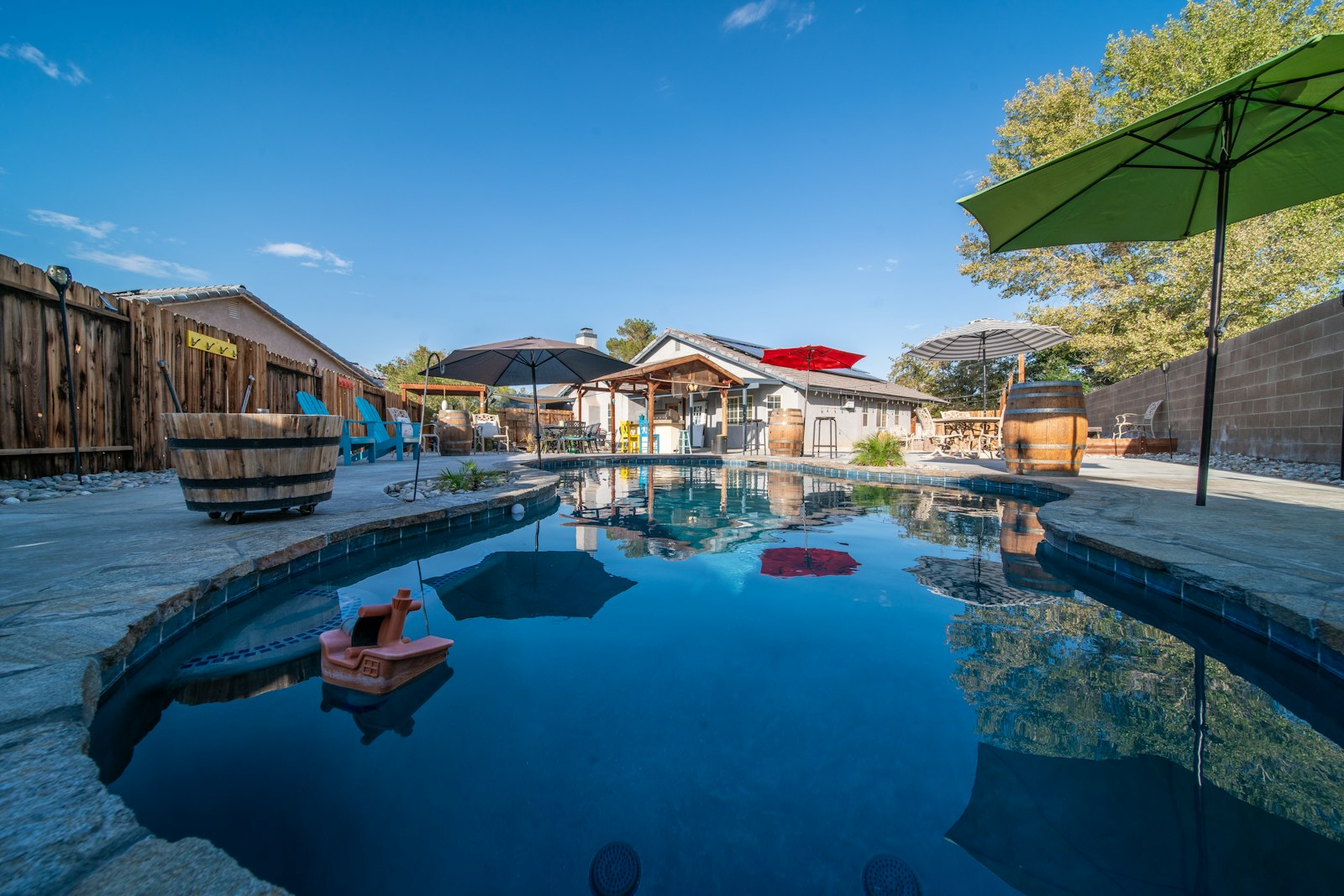
Fountain Hills is a pool town. Walk any street in FireRock, SunRidge Canyon, Eagle Mountain, or the older neighborhoods near the fountain and most backyards hold a pool or a spa, and almost every yard runs on drip irrigation. That combination makes outdoor leaks one of the most common hidden water problems here, and it is also one of the least covered. Plumbers write about finding the leak. Nobody writes the homeowner guide for what happens after the leak reaches the house: what to save, what to shut off, how to tell a pool leak from an irrigation leak, and how to know the structure is actually dry. This guide covers all of it.
Why outdoor leaks are so common in Fountain Hills
Four local conditions work together.
Very hard water. EPCOR delivers some of the hardest tap water in the Phoenix metro to Fountain Hills. Hard water leaves mineral scale inside pipes, valves, and pool equipment. Scale narrows passages, stresses joints, and shortens the life of copper lines, heater parts, and backflow assemblies. A pinhole leak in a copper line under a slab often starts where scale has thinned the metal.
Heat and sun. Summer sun bakes everything above ground. PVC irrigation lines, exposed pool plumbing, hose bibs, and backflow preventers sit in heat that makes plastic brittle and rubber seals crack. A line that held all winter can split on the first hot week of June. UV damage is slow, then sudden.
Desert soil. The ground here is hard and rocky, and it does not absorb water the way soft soil does. A leak under a patio or a walkway does not drain away. It pools against the foundation, follows the path of least resistance, and pushes through the joint where the slab meets the wall, or under a door threshold. On hillside lots, a leak uphill can surface downhill, far from the broken line.
Seasonal homes. Many Fountain Hills homes sit empty for months while their owners are away. A pool pump keeps running, an irrigation controller keeps watering, and a slow leak runs the whole time. Our seasonal homes guide covers the return checklist, and a leak check belongs at the top of it, because a leak that runs for a season does more damage than a burst pipe that is found the same day.
How to spot a hidden outdoor leak
No single sign proves a leak, but three or more together should be treated as one until a check says otherwise.
The pool loses water faster than evaporation. In summer, a Fountain Hills pool loses water to evaporation every day, so a falling level alone is not proof. The bucket test separates the two. Set a bucket of pool water on a pool step so the water inside the bucket sits at the same level as the pool water outside it. Mark both levels. Wait 24 hours with the pump running normally. If the pool level drops more than the bucket level, water is leaving the pool somewhere other than the air. Repeat the test with the pump off for a day if you can, because a leak in the pressure side only shows when the pump runs, while a leak in the shell or suction side shows either way.
The water bill jumps. A sudden rise with no change in household use often means a leak running unseen. Check the bill against the same month last year before blaming the pool. A leak of even a few gallons an hour adds up to thousands of gallons in a month, and it shows on the bill before it shows on the wall.
A patch of ground stays wet or grows faster. Look for one strip of grass or one desert plant that is greener than the rest, a soft spot in the yard, a patio joint that stays dark, or water that appears at the base of a wall after the irrigation has been off for a day. On a hillside lot, check downhill from the pool equipment pad and downhill from the irrigation valves, not just next to them.
Damp inside the house, near the floor. A leak outside often shows up as a damp baseboard, peeling paint low on a wall, tile that has come loose, or a musty smell in a room that shares a wall with the pool equipment or the irrigation manifold. Our signs of hidden water damage guide explains how to read these signs, and why a wall that feels dry on the surface can still be wet inside.
The meter test. If you suspect a leak and cannot find it, try the meter. Turn off everything in the house, including the pool pump, the irrigation controller, the ice maker, and the water softener, then watch the meter for fifteen minutes. If the dial moves with everything off, water is going somewhere. This test does not find the leak, it only confirms that one exists, which is enough to act on.
Pool leak or irrigation leak: how to tell
The fix depends on the source, so narrow it down before anyone digs.
If the pool level drops faster than the bucket, start at the pool. Check the skimmer box first, then the return lines, then the equipment pad. A cracked skimmer, a loose return fitting, or a split line at the pump are the usual suspects. Turn the pump off for a day and run the bucket test again. If the loss slows sharply with the pump off, the leak is on the pressure side, in the lines that carry water back to the pool. If the loss stays the same, the leak is in the shell, the skimmer, or the suction side.
If the pool holds steady but the yard is wet, look at the irrigation. Run each irrigation zone one at a time and watch the ground while it runs. A zone that produces a wet patch, a bubbling head, or water at the base of a wall has a broken line or a cracked fitting in that zone. Check the valve box too. A valve that will not close fully leaks constantly, even when the controller says the zone is off, and a valve box full of water is a clear sign.
If both look fine, check the main line. A leak in the service line between the meter and the house shows as a wet strip along the line, a soft spot in the driveway or walkway, or a meter that moves with everything off. This is the hardest leak to see, because the line is buried, and it is also the one that can soak a foundation the longest.
The first hour: what to do when you find it
Do these steps in order. Do not start with cleanup.
1. Stop the water at the source. For a pool leak, turn off the pool pump at the equipment pad. For an irrigation leak, turn off that zone at the controller, and if the valve keeps leaking, shut off the irrigation supply valve. If you cannot isolate the leak, shut off the main water supply to the house. Our burst pipe guide walks through the shutoff and the first steps in order, and the same order applies here.
2. Do not drain the pool. A leaking pool should not be drained by the homeowner. An empty pool in Fountain Hills heat can lift, crack, or shift, and draining it can turn a repair into a rebuild. Leave the water where it is and let the repair start with the water still in place.
3. Move things away from the wet area inside. Lift furniture legs onto blocks or foil, move rugs, boxes, electronics, and papers out of the damp room, and take dated photos of the water line on the wall, the wet floor, the pool level, and the wet patch outside. These photos are the start of the record.
4. Note the timing. Write down when you first noticed the sign, what the pool level and the bill showed, and which zones or equipment were running. A leak that ran for weeks needs a different drying plan from a leak found the same day, and the notes help the drying plan match the real exposure.
5. Call for help early. A leak that has been soaking a slab or a wall for weeks cannot be dried with a household fan. The longer block, stucco, drywall, and flooring stay wet, the more has to be removed. Calling early is the decision that keeps the repair small, and it matters more with a hidden leak than with a visible one, because the hidden leak has already had a head start.
What gets wet inside, and why it matters
An outdoor leak damages the house from the outside in, which is the opposite of a burst pipe, and the drying plan has to match that.
The slab. Water under a slab wicks up through the concrete and into the flooring above it. Tile can loosen, wood floors can cup, and carpet pad can stay soaked while the carpet surface feels dry. Our slab leaks guide covers how hidden water under a slab is found and verified, and the same checks apply here.
Block and stucco walls. Fountain Hills homes are largely block and stucco, and both hold water. Stucco can look dry on the outside while the wall behind it is wet, and block cores can hold water for a long time. Drying a block wall takes longer than drying drywall, and it has to be verified with readings, not with a touch test. Our block and stucco drying guide explains the process.
Cabinets, baseboards, and flooring. Water that enters at floor level soaks baseboards first, then the bottom of cabinets and the drywall behind them. A baseboard that looks fine can hide a wet wall cavity. The rule is simple: if the baseboard is wet, assume the wall behind it is wet until a reading says otherwise.
What the desert heat does not do. It is tempting to think Fountain Hills heat will dry the house on its own. It will dry the surface, and that is the problem. A surface that looks dry while the inside is still wet is how mold starts behind a wall and how a floor fails weeks later. Drying has to be verified with moisture readings in the wall, the slab, and the flooring, not with a glance at the surface. Our guide on how long water damage takes to dry explains why the timeline depends on the material, not on the weather.
Drying verification: readings, not guesswork
After extraction, drying is verified in three places.
The wall. Moisture readings are taken at the base of the wall and at intervals up the wall, on both sides if the wall is shared. A wall is dry when readings match a dry wall of the same material in an unaffected room, not when it feels dry to the hand.
The slab and floor. Readings are taken through the flooring or at the slab edge, and the same spots are checked again over days to confirm the numbers are falling and staying down. A single low reading on one day is not proof. Two readings, days apart, that agree are.
The air. Relative humidity in the room is tracked while dehumidifiers run. If the air stays humid, water is still leaving the structure, and the equipment stays. When the room holds a steady, normal humidity with the equipment off, the structure is close to dry.
Keep the readings. Dated photos, meter readings, and moisture logs are the record that shows the job was done properly, and they are the same record an insurer asks for. Our water extraction guide explains the sequence from extraction to verification.
Prevention: the checks that catch the next leak early
Check the pool level once a week in summer. A weekly bucket test in the hot months catches a slow leak before it has run for a season. Mark the level on the same day each week so the comparison is honest.
Walk the irrigation zones once a month. Run each zone and watch it. Look for heads that spray sideways, a zone that stays wet after it shuts off, and a valve box that holds water. A ten minute walk a month is cheaper than a wall rebuild.
Have the backflow assembly tested every year. Fountain Hills irrigation backflow testing is a yearly requirement for many properties, and the test is also a leak check. A backflow assembly that fails its test is often the same assembly that has been leaking quietly.
Replace hoses and seals on a schedule, not on failure. Pool pump hoses, cleaner hoses, and rubber seals age in the sun. Replace them before they split, and keep the equipment pad shaded and clear of debris so a small leak is visible instead of hidden behind stored items.
For a seasonal home, shut it down properly. Before leaving for the season, turn off the irrigation at the supply, set the pool equipment to its away setting, and have someone check the pool level and the meter once a week. A leak found in week one is a repair. A leak found on return is a rebuild. Our seasonal homes guide has the full return checklist.
Frequently Asked Questions
How much water can a small pool leak lose?
A leak you cannot see can lose hundreds of gallons a day, and a slow leak can run for weeks before the pool level or the bill makes it obvious. That is why the bucket test and a weekly level check matter more than any single inspection.
Can an irrigation leak really damage the inside of a house?
Yes. Irrigation water runs against the foundation, follows the slab edge, and enters through the wall joint or under a threshold. The damage shows up inside as a damp baseboard, a loose tile, or a musty room, often far from the broken line.
Should I drain my pool if it is leaking?
No. Do not drain a leaking pool yourself. An empty pool can lift or crack in the heat, and draining it can make the repair much bigger. Turn off the pump, keep the water in place, and let the repair start from there.
How do I know if the wall is actually dry after a leak?
By moisture readings, taken in the wall and compared with a dry wall of the same material, and repeated over days. A wall that looks dry and feels dry can still be wet inside, and only readings confirm it.
Does a pool leak affect my water bill?
Yes, and the bill is often the first warning. A leak that runs day and night adds thousands of gallons in a month. Compare the bill with the same month last year, and if it jumped with no change in use, run the meter test described above.
Additional Details
- Published: 2026-11-10
- Call: (480) 914-8813
- Address: 13220 N Eagle Ridge Dr, Fountain Hills, AZ 85268